How the ancient kingdom of Kush conquered its northern neighbor, built a metallurgical empire, and challenged the Eurocentric narrative of the Nile Valley.
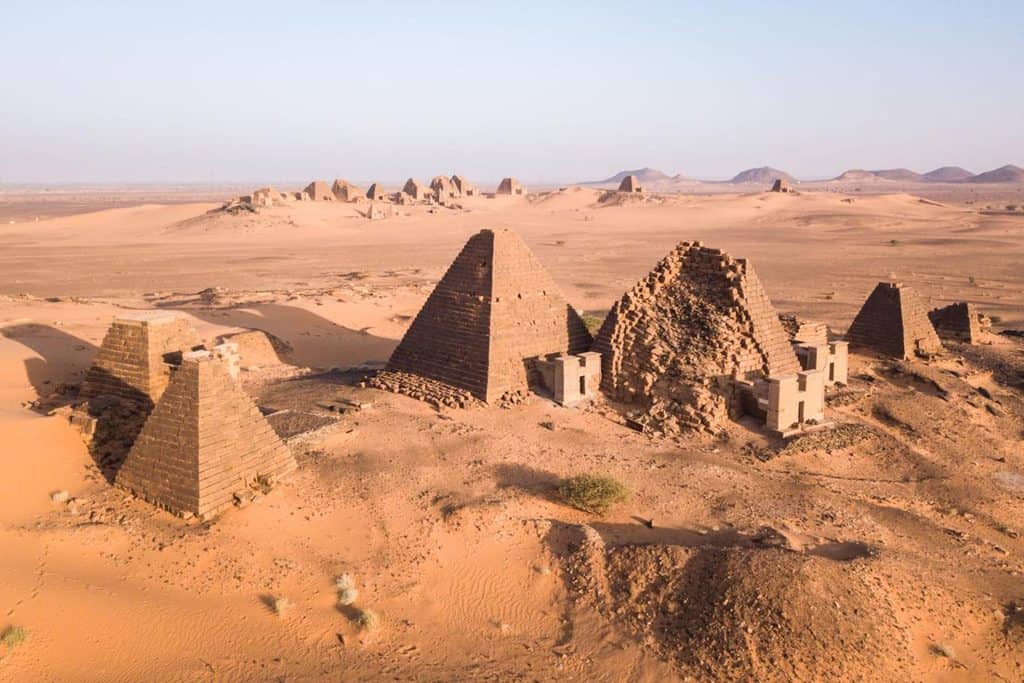
In 1834, an Italian treasure hunter named Giuseppe Ferlini scaled a steep, narrow pyramid standing isolated in the Nubian desert at Meroë, placed charges of gunpowder along its apex, and detonated them. As the shattered masonry cleared, revealing a hidden hoard of gold jewelry belonging to the 1st-century BCE Queen Amanishakheto, European academia confronted an intellectual crisis. Here was unequivocal evidence of a sophisticated, wealthy, and artistic civilization operating deep in Sub-Saharan Africa. Yet, steeped in the racial hierarchies of the nineteenth century, Western scholars were structurally unequipped to accept what lay before them.
For more than a century afterward, mainstream Egyptology attempted to explain away the monuments south of the First Cataract. Scholars attributed Kushite architecture to hypothetical Mediterranean migrants, characterized Nubian religion as a mere pale imitation of northern neighbors, or reduced the region to a passive colonial vassal of pharaonic Egypt. This narrative was not merely incomplete; it was an inversion of historical reality. The Kingdom of Kush was an independent, long-lived African superpower that dominated the middle Nile for over two millennia. It held the gold reserves that underwrote ancient Mediterranean commerce, turned back the expansionist armies of imperial Rome, developed its own written script, and, at its geopolitical zenith, conquered Egypt itself—ruling from the Mediterranean Sea to the confluence of the Blue and White Niles.
The Foundations of Nubian Power
The history of Kush is not a static chronicle, but an evolving saga spanning three distinct eras, each defined by its political capital, economic engine, and architectural expression. Long before the era of the famous Kushite pharaohs, the foundational stage of this civilization took root at Kerma, near the Third Cataract of the Nile. Flourishing between 2500 and 1500 BCE, Kerma developed into one of Africa’s earliest urban centers, organized around a monumental, sacred mud-brick architecture dominated by the Western Deffufa—a massive structure that rose over thirty meters above the floodplain.
Kerma was neither a provincial outpost nor an isolated enclave. Its artisans produced eggshell-thin, fire-polished ceramics that remain among the finest artistic achievements of the ancient Nile. Militarily, Kerma posed such a formidable threat that the Pharaohs of Egypt’s Middle Kingdom built a network of massive, heavily fortified strongholds along the Second Cataract specifically to contain Nubian expansion. When Egypt fractured during the Second Intermediate Period, Kerma pressed its advantage, launching deep military raids northward into Egyptian territory. Although the eventual rise of Egypt’s New Kingdom around 1550 BCE resulted in a four-century Egyptian occupation of Kush, this period of subjection did not erase Nubian identity. Instead, it set the stage for a dramatic cultural and political synthesis.
When the Egyptian New Kingdom collapsed around 1070 BCE, pulling northern garrisons back to the Delta, Kush did not dissolve into administrative chaos. Local Nubian dynasties reasserted control, establishing a new political seat at Napata near the sacred mountain of Jebel Barkal. Crucially, the elite of Napata did not reject the cultural elements introduced during the centuries of Egyptian occupation; they appropriated them. Viewing themselves as the true, orthodox preservers of the state god Amun, the Kushite rulers came to regard northern Egypt—then fractured into competing, corrupt city-states—as spiritually bankrupt.
The 25th Dynasty and the Resurgence of the Nile
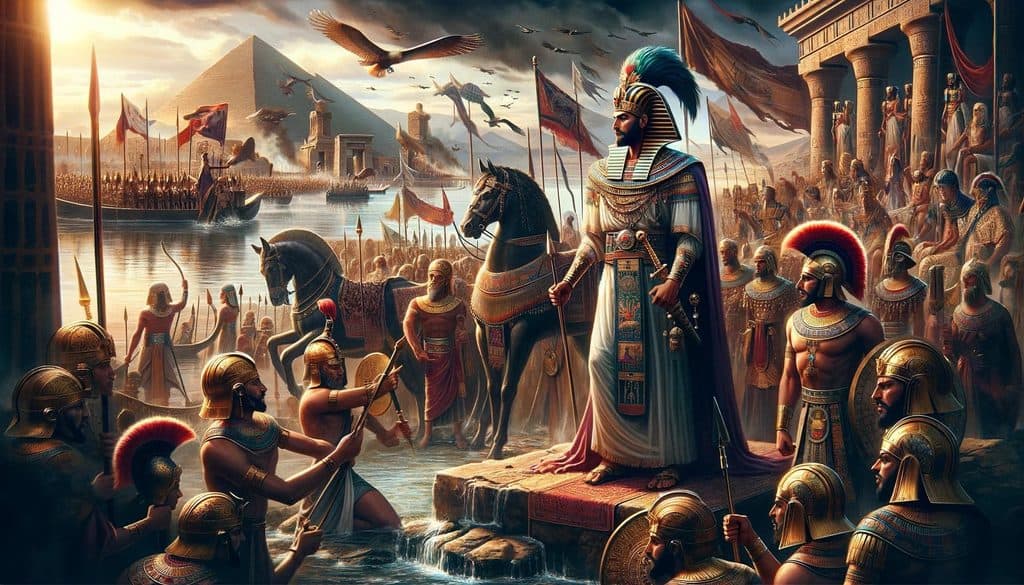
By the mid-eighth century BCE, the geopolitical balance of power had permanently inverted. Under King Kashta, Kush began a systematic push northward into Upper Egypt. The conquest was completed by his son, Piye, whose campaign is immortalized on a massive granite stele erected at Jebel Barkal. Piye’s narrative reveals a campaign driven as much by religious zeal as territorial ambition. Moving down the Nile, his forces subdued local dynasts not through total destruction, but by demanding religious submission and purifying temples that he claimed had been desecrated by northern rulers.
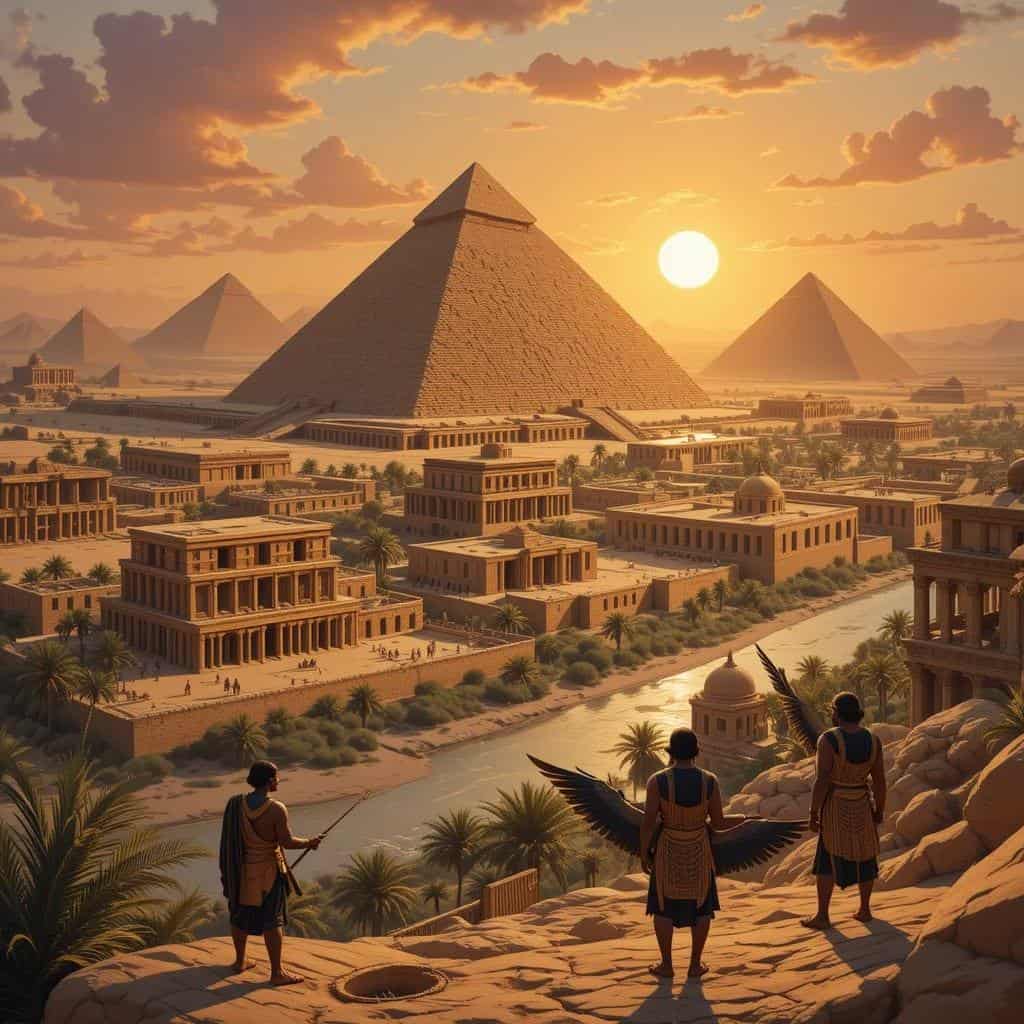
Piye and his successors—Shabaqo, Shebitqo, Taharqa, and Tantamani—established Egypt’s 25th Dynasty, uniting the entire Nile Valley under a single crown for nearly a century. Rather than imposing foreign customs, these “Black Pharaohs” initiated a sweeping cultural renaissance. They restored decaying temples at Karnak, Memphis, and Sanam, commissioned works of art that revived the classical proportions of the Old and Middle Kingdoms, and resurrected the tradition of royal pyramid burials at El-Kurru and Nuri, a practice that had been abandoned in Egypt for centuries.
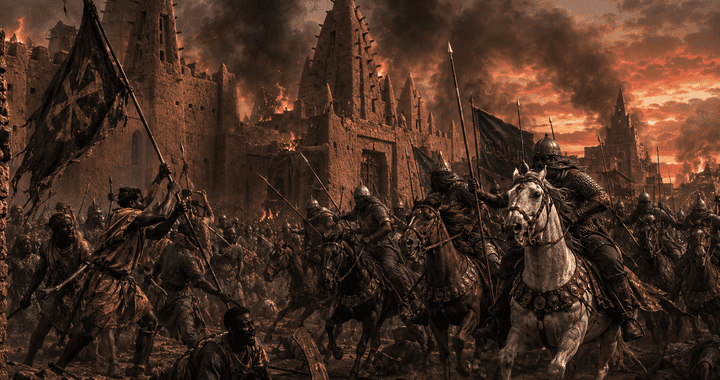
Among these rulers, Taharqa emerged as a builder and administrator of grand vision. His reign oversaw vast architectural expansions across Egypt and Nubia, funded by prosperous trade and abundant harvests. However, Taharqa’s reign also intersected with the aggressive westward expansion of the Neo-Assyrian Empire, the dominant military power of the Near East. Supporting Levantine city-states resisting Assyrian hegemony, Taharqa drawn his empire into a brutal, multi-decadal conflict. Equipped with iron weaponry, sophisticated siege engines, and vast armies, the Assyrians repeatedly invaded Egypt, eventually sacking the sacred city of Thebes in 663 BCE. Forced to withdraw south of the cataracts, the Kushite kings yielded Egypt, but their core empire in the south remained unbroken.
The Meroitic Shift and Industrial Mastery
Facing continued pressure from Egypt’s 26th Dynasty, which launched a destructive southern raid against Napata in 590 BCE, the Kushite court made a strategic decision that transformed the nature of their state. They moved their primary capital further south to Meroë, situated between the Fifth and Sixth Cataracts. This geographic pivot altered the economic and ecological foundation of the empire.
Unlike the arid, narrow agricultural strip around Napata, Meroë sat within a tropical rainfall zone. This allowed for extensive rain-fed agriculture and vast savanna pasturelands capable of supporting massive cattle herds. More importantly, the region surrounding Meroë possessed abundant deposits of iron ore and dense acacia forests capable of supplying timber for fuel. Within a century, Meroë transformed into one of the ancient world’s primary centers of iron production, generating slag heaps so immense that early twentieth-century archaeologists referred to the city as the “Birmingham of Ancient Africa.”
Iron tools revolutionized Kushite agriculture, while iron weaponry provided the military power needed to dominate regional trade routes. To manage water resources in this semi-arid environment, Kushite engineers constructed hafirs—enormous, circular earthen reservoirs designed to catch and hold monsoon runoff. These hydraulic structures allowed large urban populations, agricultural settlements, and royal livestock herds to thrive miles away from the Nile, breaking the state’s absolute dependence on the river’s immediate banks.
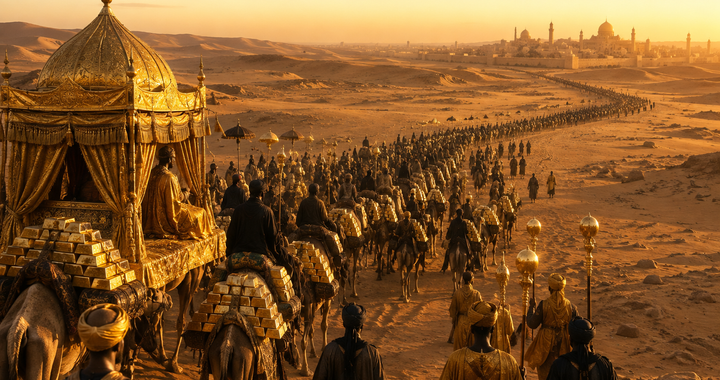
Meroë also operated as the central clearinghouse for a trade network connecting the African interior with the Mediterranean world and the Red Sea. Kushite caravans and river fleets exported gold extracted from the Eastern Desert, along with ebony, ivory, aromatics, exotic animal skins, and live animals. In return, Meroë imported Roman glass, fine ceramics, Mediterranean wine, and Greek luxury goods, creating a cosmopolitan society that synthesized indigenous African, Egyptian, and Hellenistic elements.
Queens of Iron and the Unbroken Script
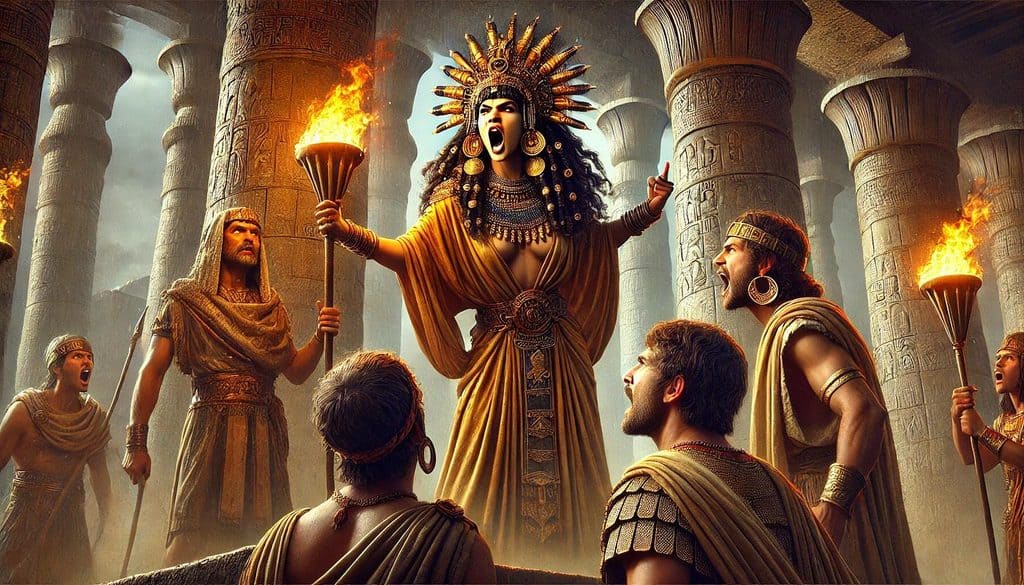
Among the most striking features of the Meroitic era was the institutional power wielded by female monarchs, known by the title Kandake (the origin of the modern name Candace). The Kandakes were not merely queen consorts or temporary regents ruling on behalf of young heirs; many were sovereign rulers who governed independently, directed state religion, signed treaties, and led armies into battle.
This martial tradition was demonstrated following the Roman conquest of Egypt in 30 BCE. When Roman forces pressed south to establish a border zone, the legendary one-eyed Queen Amanirenas launched a swift counter-offensive into Upper Egypt. Her troops captured key Roman outposts, pulling down bronze statues of the Emperor Augustus. In a calculated act of symbolic defiance, the head of one statue was carried back to Meroë and buried beneath the entry stairs of a victory temple, ensuring that everyone entering the sacred space would physically step on the emperor’s likeness.
The subsequent war lasted several years, ending in a negotiated peace treaty mediated at Samos. The historian Strabo noted that Amanirenas secured terms so favorable that Augustus waived all demands for tribute and recognized the Meroitic border. The severed bronze head of Augustus, remarkably preserved in the dry sand beneath the temple threshold, was excavated in 1911 and remains a vivid testament to Kushite sovereignty.
Alongside political independence, Meroë developed its own indigenous writing system around the second century BCE. Replacing Egyptian hieroglyphs, the Meroitic script consisted of a twenty-three-letter alphabet produced in both formal hieroglyphic and everyday cursive forms, making it one of the earliest written languages in Sub-Saharan Africa. While British philologist F. Ll. Griffith deciphered the phonetic values of the characters in the early twentieth century, the underlying language itself remains largely untranslated. Because surviving texts are primarily funerary inscriptions with repetitive formulaic phrasing, and because no long bilingual document comparable to the Rosetta Stone has yet been discovered, the deep internal literature, history, and administration of late Kush remain written in a voice we can pronounce, but not fully understand.
The Arc of Decline and the Modern Rediscovery
By the fourth century CE, the power of Meroë began to fade, driven by a complex interplay of ecological, economic, and military pressures rather than a single sudden catastrophe. Centuries of continuous iron smelting had consumed vast swaths of the surrounding acacia forests, causing severe local deforestation and soil degradation. Simultaneously, the rise of the Kingdom of Axum in the Ethiopian highlands diverted lucrative Red Sea trade routes away from the Nile valley, severely undercutting the economic base of the Meroitic court. Around 350 CE, King Ezana of Axum launched a military expedition into the middle Nile, recording the defeat of a already weakened and fragmented state.
The historical marginalization that followed was long and deliberate. For centuries, Western historiography subordinated Nubian history to the study of Egypt, evaluating Kushite accomplishments through a lens of cultural derivation. Modern archaeology, led by pioneering excavations at Kerma, Jebel Barkal, and Meroë, has systematically dismantled these biases. Contemporary consensus recognizes Kush as an independent incubator of African urbanism, statecraft, and technology—a power that influenced Egypt as profoundly as Egypt influenced it.
Today, the physical legacy of Kush is visible across the landscape of modern Sudan, where more than two hundred pyramids stand at sites like Meroë, Nuri, and El-Kurru—far outnumbering those found in Egypt. Yet these monuments face severe contemporary threats, ranging from encroaching desertification and rising groundwater levels to the catastrophic disruptions of modern regional conflict. Preserving this heritage is not merely a matter of archaeological stewardship; it is an essential project of global historical restoration. The Kingdom of Kush demonstrates that complex statecraft, industrial innovation, and literary culture flourished in the heart of North-East Africa for millennia, standing not in the shadow of the ancient world, but at its very center.