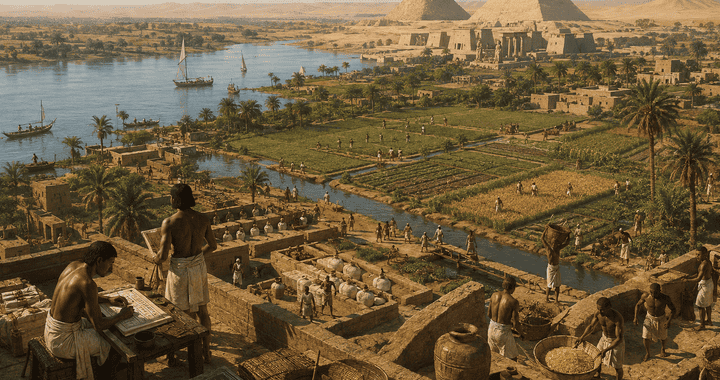
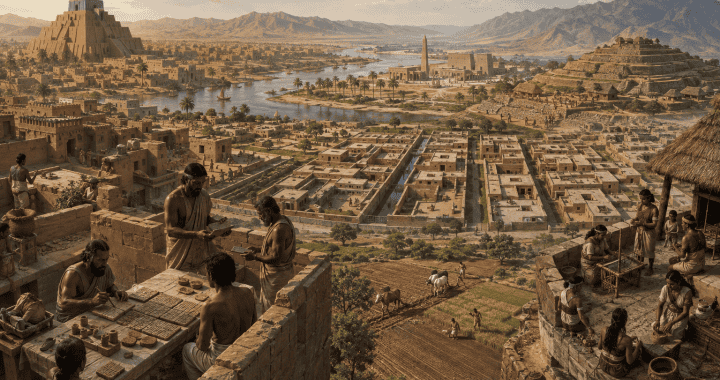
How pre-colonial African societies built complex institutions, global trade networks, intellectual centers, and technological traditions
Executive Summary
Prior to the nineteenth-century European conquest, Africa was characterized by sophisticated institutional diversity, global commercial integration, and intellectual vitality. Rather than a uniform landmass waiting for external statehood, the continent hosted centralized empires controlling continent-spanning trade routes, wealth-generating coastal city-states, and decentralized polities engineered to check autocratic power. This analysis examines pre-colonial African governance, trade mechanisms, technological developments, and intellectual systems. It addresses historical misconceptions and highlights the enduring impacts of these pre-colonial frameworks on modern geopolitical trajectories.
The Architecture of Forgotten Sovereignty
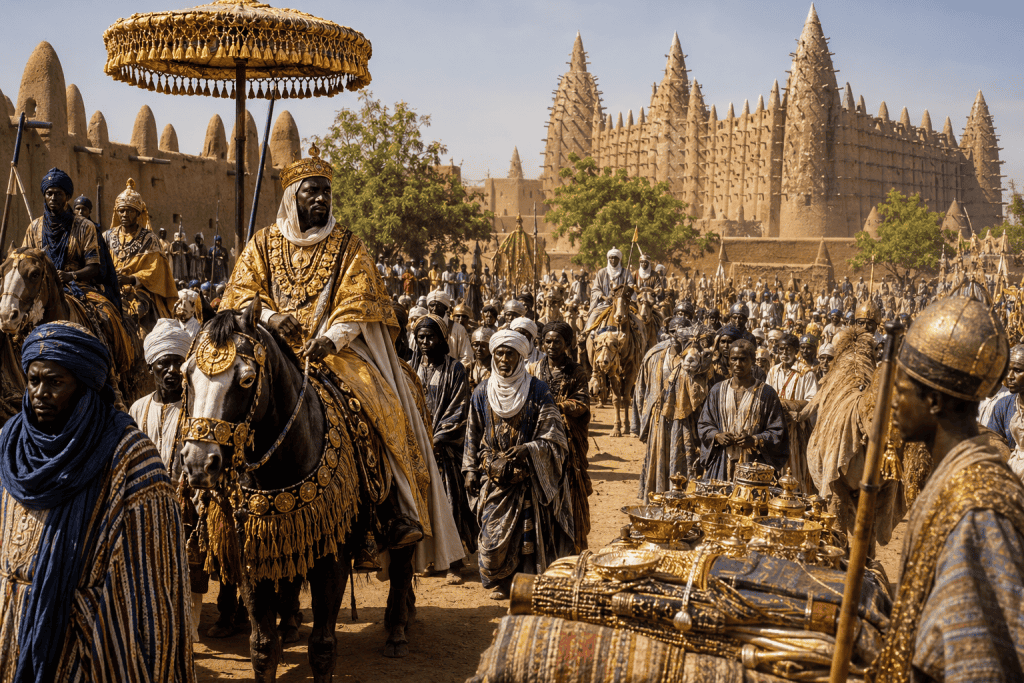
In 1324, the ruler of the Mali Empire, Mansa Musa, embarked on a pilgrimage to Mecca. His entourage—consisting of tens of thousands of soldiers, attendants, and heralds draped in silk and bearing pure gold—dismounted in Cairo and spent gold so lavishly that it inflated local commodity markets and depressed the value of the Cairo gold dinar for over a decade. European cartographers took note. By 1375, the Catalan Atlas depicted the African interior not as an empty wilderness, but centered around a enthroned monarch holding a massive golden orb: Musa, Lord of the Negroes of Guinea.
| Centralized State Systems | Decentralized Societies |
| ~44% of total population | ~56% of total population |
| Imperial bureaucracies; taxation and tribute networks; standing armies | Age-grade councils and guilds; lineage-based governance; distributed judicial institutions |
| Examples: Mali, Songhai, Asante, Buganda, Ethiopia | Examples: Igbo, Tiv, Nuer, Kikuyu, Tallensi |
Yet, the historical narrative that emerged in Europe during the nineteenth century erased this economic reality. To justify colonial expansion, imperial ideologues posited that Africa lacked history, statecraft, written traditions, and institutional governance. This construct relied on a narrow assumption: that legitimate civilization required centralized, territorial nation-states built around European-style borders and coercive monarchs.
The evidence tells a different story. Before the Berlin Conference of 1884–1885, Africa sustained roughly 45,000 independent polities. These ranged from centralized empires boasting standing armies and complex bureaucracies to sophisticated “acephalous” (headless) societies that systematically engineered power to prevent the rise of autocracy. Pre-colonial Africa was an active participant in global trade, scientific innovation, and constitutional design.
The Dual Architectures of Governance
The political landscape of pre-colonial Africa was defined by two primary organizational paradigms: centralized state systems and decentralized, segmentary societies.
| Regional System | Examples / Main Features |
| Sahelian commercial axis | Ghana → Mali → Songhai → Kanem-Bornu; trans-Saharan gold and salt trade |
| Atlantic forest belt | Asante, Benin, Dahomey, Oyo; kola nuts, gold and craft trade; divine kingship and federalism |
| Indian Ocean network | Swahili coastal city-states and Somali sultanates; maritime commerce with Arabia, Persia, India and China |
| Interior & Great Lakes | Buganda, Bunyoro, Great Zimbabwe; cattle, bananas and iron |
Centralized State Systems
In regions such as the West African Sahel, the forest belt, the Horn of Africa, and the Great Lakes, centralized states managed dense populations through formal institutions.
- The Sahelian Empires (Ghana, Mali, Songhai): The Mali Empire (c. 1235–1600) operated under a federal structure established by the Kouroukan Fouga—an oral constitution created following the victory of Sundiata Keita. The Kouroukan Fouga divided political duties among social guilds, guaranteed protections for women and captives, and established land rights. Provincial governors (Farbas) managed regional administration while recognizing local legal customs.
- The Asante Confederacy: In the West African forest belt, the Asante state organized regional paramount chiefs into a federal council under the Asantehene (King). The state maintained public unity using symbolic heritage (the Golden Stool) while establishing a professional civil service (Nsumankwaa) to manage trade, taxation, and communication along roads radiating from Kumasi.
- The Kingdom of Buganda: Surrounding Lake Victoria, Buganda developed a centralized monarchy where the Kabaka reduced the inherited power of clan heads (Bataka) by appointing royal governors (Saza Chiefs). This administrative framework allowed Buganda to maintain agricultural infrastructure, build naval fleets on Lake Victoria, and support professional standing forces.
Decentralized and Acephalous Societies
Societies such as the Igbo, Tiv, Kikuyu, and Nuer managed public life without centralized monarchs or standing armies. Early European observers often mistook the absence of a king for an absence of law. However, these polities were governed through balanced institutional structures:
- Age-Grade Systems: Men and women born within specific multi-year windows passed through structured life stages together. Each age-set held defined civic duties, such as maintaining public infrastructure, policing markets, or serving as a defensive force, preventing any single lineage from monopolizing power.
- Title Societies and Councils: Among the Igbo, the Ozo title system required individuals to demonstrate personal ethics, civic contribution, and redistributed wealth before entering governance councils. Decision-making relied on direct democracy and consensus-building within local assemblies (Ama-ala).
- Cross-Cutting Ritual Associations: Institutions like the Ekpe (Leopard Society) in the Cross River region functioned as trans-regional judicial bodies. Ekpe enforced commercial contracts, protected property rights, and mediated inter-community conflicts across cultural and linguistic lines without a central military state.
Evolution and Turning Points: Commercial Engines and Intellectual Hubs
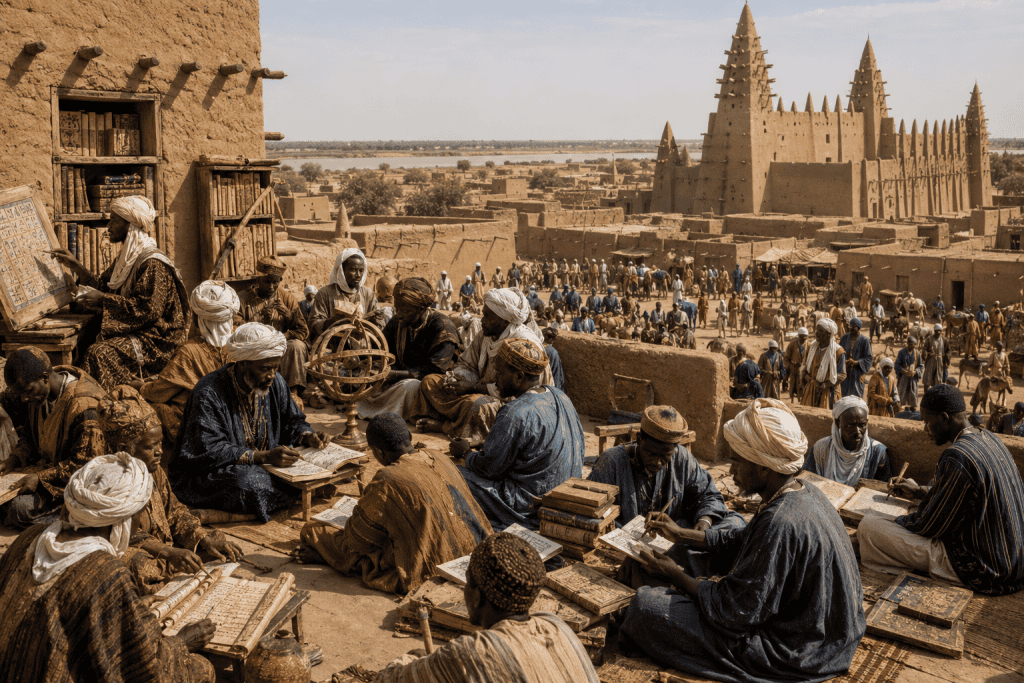
Pre-colonial Africa’s history was continuously shaped by economic adaptation, regional trade routes, and intellectual centers.
| Route | Major Traded Commodities | Connected Regions |
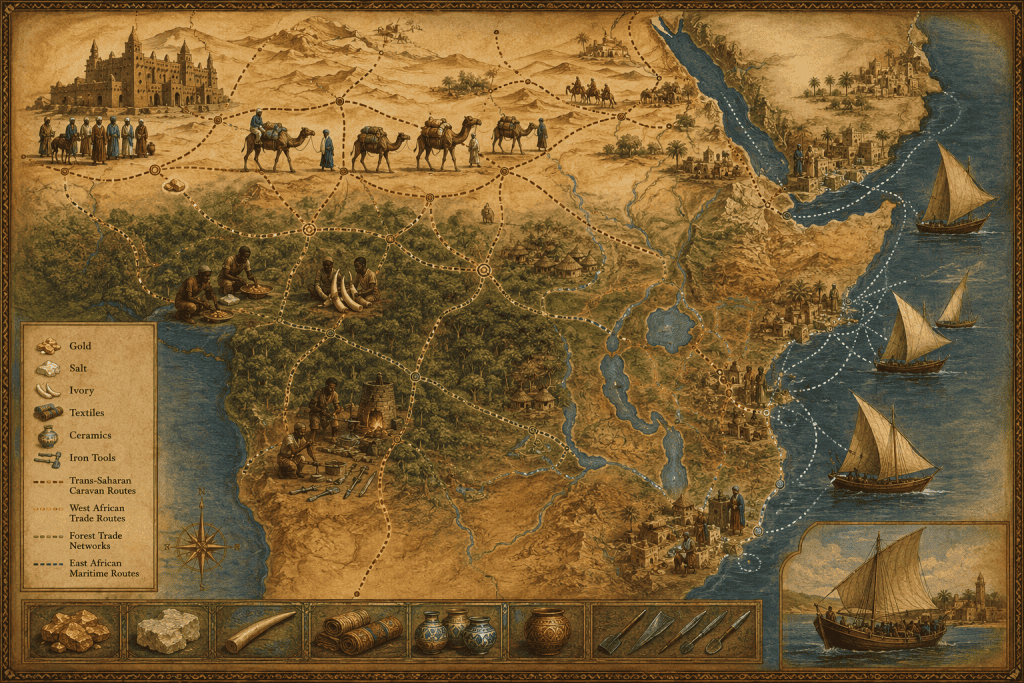
| Trans-Saharan | Gold, ivory, leather, slaves, kola nuts; salt, textiles, horses, manuscripts | West Africa ↔ North Africa, Mediterranean and Middle East |
| Indian Ocean Maritime | Gold, iron, ivory, timber, spices; silk, porcelain, glass, cotton textiles | East African coast ↔ Arabia, Persia, India and China |
| Regional Interior Networks | Agricultural surpluses, cattle, smelted iron tools, copper ingots, dried fish | Forest-Sahel transition, Great Lakes and Congo Basin |
Trans-Saharan and Indian Ocean Networks
African states developed sophisticated economic networks long before Atlantic contact. The Trans-Saharan trade relied on the camel to connect West African goldfields (Bambuk, Bure, Akan) with North African and European monetary systems. During the High Middle Ages, a significant portion of the gold circulating in Mediterranean commerce originated from West African mines.
On the East African coast, Swahili city-states—including Kilwa, Mombasa, Zanzibar, and Lamu—developed a maritime commercial culture. Using monsoon winds, Swahili merchants navigated dhows across the Indian Ocean. Kilwa controlled the southern gold trade from the inland empire of Great Zimbabwe, importing Ming dynasty porcelain, Persian ceramics, and Indian textiles.
| Center | Specialization & Contributions |
| Timbuktu & Djenné | Sankoré scholarship; manuscripts on mathematics, astronomy, Islamic jurisprudence and medicine |
| Lalibela & Gondar | Rock-hewn architecture; Ge’ez literary traditions, theology, philosophy and historical chronicles |
| Great Zimbabwe & Khami | Mortarless stone masonry with structural and defensive engineering |
| Ajuran Sultanate | Hydraulic engineering, limestone wells and irrigation networks |
Intellectual Hubs and Written Traditions
The assumption that pre-colonial Africa relied exclusively on oral culture ignores widespread literacy and academic production across various regions:
- The Timbuktu Manuscripts: By the 15th century, the University of Sankoré in Timbuktu accommodated an estimated 25,000 scholars. Hundreds of thousands of manuscripts—written in Arabic and local languages using Ajami script (such as Hausa, Fulfulde, and Mandinka)—documented optics, mathematics, legal theory, governance essays, and medicinal botanical studies.
- Ethiopian Christian Scholarship: The Ethiopian Highlands maintained a continuous written literary culture in Ge’ez dating to the Axumite period (4th century CE). Textual production encompassed philosophy (such as the rationalist ethics of Zera Yacob), astronomy (Hasab calendar calculations), and legal codes (Fetha Nagast).
Evidence and Analysis: Metallurgy, Agriculture, and Urban Planning
Archaeological and historical data highlight the technical capabilities of pre-colonial African societies.
| Metallurgy & Craft | Agriculture & Environment | Urban Planning |
| Direct iron smelting; lost-wax bronze casting at Ife and Benin | Terracing and soil management; pastoral rotation; banana and yam cultivation | Benin earthworks; Kilwa coral-stone architecture; Great Zimbabwe dry-stone walls |
Metallurgy and Industrial Crafts
Iron smelting emerged independently in sub-Saharan Africa (notably within the Nok culture of modern-day Nigeria and the Great Lakes region) by the first millennium BCE. African metallurgists built high-temperature bloomery furnaces capable of producing carbon steel using pre-heated air technology—a process that European industrial manufacturing did not replicate until the 19th century.
In metal casting, the lost-wax bronzes of Ife and the Kingdom of Benin demonstrated advanced metallurgical precision and anatomical realism. When British forces looted Benin City in 1897, the artistic complexity of these metalworks challenged contemporary European assumptions regarding African art history.
Urban Design and Civil Engineering
Pre-colonial urban architecture integrated functional design with environmental adaptation:
- The Walls of Benin: The Kingdom of Benin constructed a network of earthworks combining city walls and rural embankments estimated at 16,000 kilometers in length. Contemporary records described a planned urban center featuring street lighting fueled by palm oil, structured drainage systems, and modular residential layouts.
- Great Zimbabwe: Constructed between the 11th and 15th centuries by ancestors of the Shona people, Great Zimbabwe stands as a stone architectural complex built entirely without mortar. The Great Enclosure features granite walls reaching over 11 meters in height, constructed using precise stone-fracturing techniques.
Key Insights and Hidden Patterns
A critical analysis of pre-colonial African political economies reveals structural patterns that challenge conventional historical models:
| Pattern | Structural Reality |
| Land abundance vs. labor scarcity | Governance prioritized control of people, labor and trade networks over rigid spatial borders. |
| Institutional checks on autocracy | Age-sets, secret societies and councils distributed authority and limited central autocracy. |
| External destabilization | Atlantic slave trades reoriented productive economies toward defense, militarization and trade disruption. |
1. Sovereignty Over People, Not Lines on Maps
In contrast to Western state building—where land scarcity drove wars for territorial conquest—much of pre-colonial Africa operated under conditions of relative land abundance and low population density. Consequently, political power was measured by the number of adherents, dependents, and trade routes a leader could maintain, rather than geographic borders. Borderlands remained fluid zones of cultural and economic interaction.
2. Deliberate Rejection of Centralized Autocracy
Decentralized political structures were not incomplete stages of state development. Modern economic research shows that many African societies intentionally designed institutions to avoid the concentration of coercive power. By distributing authority across age-grades, lineage councils, and specialized guilds, these communities prioritized local autonomy over centralized extraction.
3. The Destabilization of Commercial Dynamics
The expansion of the Transatlantic and Indian Ocean slave trades between the 16th and 19th centuries altered domestic African political economies. Human capital extraction incentivized predatory warfare, destabilized internal trade routes, and encouraged militarized states at the expense of agricultural and industrial development.
Competing Interpretations: The Debate Over African Statehood
| Institutional Absence Model | Intentional Decentralization Model |
| Environmental factors and low population density constrained centralized state-building and territorial control. | Societies could intentionally choose decentralized frameworks to avoid autocratic control. |
| Centralized taxation and standing armies were often difficult to sustain over large territories. | Local governance could provide public goods, law and dispute resolution without a centralized ruling class. |
Scholars remain divided on why centralized states were not universal across the continent before colonization:
- The Environmental/Geographic Determinism Model: Proponents of this view, such as political scientist Jeffrey Herbst, argue that geography, high disease environments (malaria, tsetse fly), and poor agricultural soils made projecting power across distances difficult. Establishing tax systems and standing armies across large areas was often economically unviable, leading to state weakness.
- The Institutional Choice Model: Scholars such as Soeren Henn and James A. Robinson (2026) challenge the assumption that European-style statehood represents the only model of successful political development. They argue that African societies intentionally chose decentralized political arrangements. These non-state polities effectively provided public goods, managed resources, and resolved disputes without creating predatory ruling classes.
Present-Day Relevance: The Persistence of Pre-Colonial Institutions
Understanding pre-colonial African institutions is essential for analyzing modern African political and economic realities:
- Dual Legal and Political Systems: Colonial administrations imposed artificial borders and central state structures while utilizing “indirect rule” to manipulate local chiefs. Today, many African post-colonial states operate under dual systems where formal state law exists alongside pre-colonial customary laws that command significant public trust.
- Informal Governance Networks: Modern African trade and cross-border commerce rely on informal credit networks, merchant guilds, and lineage trust systems derived from pre-colonial institutions.
- Conflict and State Legitimacy: Where post-colonial national borders divided pre-colonial communities or combined historically distinct political groups, central state institutions have struggled to establish legitimacy, leading to political instability.
Future Outlook: Projections for Reimagining African Governance
The legacy of pre-colonial institutional models offers key insights for the future of governance and development across the continent:
| Scenario | Probability | Key Assumptions | Core Outcome |
| Optimistic: Institutional Integration | 40% | AfCFTA implementation; economic decentralization | Hybrid governance restores local legitimacy |
| Most Likely: Pragmatic Dualism | 50% | Continued dual-state systems; adaptation of customary law | Incremental reform through local institutions |
| Worst-Case: Centralized Decay | 10% | Expansion of centralized power without local representation | Friction between formal state and population |
Optimistic Scenario: Institutional Integration
- Probability: 40%
- Outcome: African nations integrate pre-colonial governance principles—such as consensus-based decision making, decentralized community autonomy, and cross-border trade networks—into modern constitutional frameworks. The implementation of the African Continental Free Trade Area (AfCFTA) restores pre-colonial trans-regional trade routes, driving economic growth.
Most Likely Scenario: Pragmatic Dualism
- Probability: 50%
- Outcome: States continue to operate under a combination of formal post-colonial state structures and informal pre-colonial institutions. Local communities rely on customary dispute resolution, age-grade social safety nets, and traditional leadership to bridge gaps in central state services.
Worst-Case Scenario: Centralized Decay
- Probability: 10%
- Outcome: National governments enforce top-down, centralized authority while marginalizing traditional community institutions. This deepens public distrust, undermines legal legitimacy, and increases political instability.
Conclusion: Reclaiming the Historical Record
Pre-colonial Africa was an institutionally diverse, economically integrated, and intellectually vibrant continent. Its societies developed complex state mechanisms, world-class centers of learning, advanced metallurgical technologies, and sophisticated decentralized political systems engineered to safeguard human freedom.
Recognizing this history changes the narrative surrounding African development. Pre-colonial African polities demonstrated that civilization, order, and progress do not require a single, rigid model of statehood. As the continent navigates the twenty-first century, its pre-colonial legacy offers an invaluable foundation for building equitable, legitimate, and effective governance systems.
References & Sources
1. Henn, Soeren J., and James A. Robinson. (2026). Africa as a Success Story: Political Organization in Pre-Colonial Africa. Chicago: Becker Friedman Institute for Economics / VoxDev.
2. Iliffe, John. (2007). Africans: The History of a Continent. Cambridge University Press.
3. Mamdani, Mahmood. (1996). Citizen and Subject: Contemporary Africa and the Legacy of Late Colonialism. Princeton University Press.
4. Rodney, Walter. (1972). How Europe Underdeveloped Africa. Bogle-L’Ouverture Publications.
5. Thornton, John. (1998). Africa and Africans in the Making of the Atlantic World, 1400–1800. Cambridge University Press.
6. UNESCO. (1981–1993). General History of Africa (Volumes I–VIII). Heinemann / California / UNESCO.
7. Herbst, Jeffrey. (2000). States and Power in Africa: Comparative Lessons in Authority and Control. Princeton University Press.